
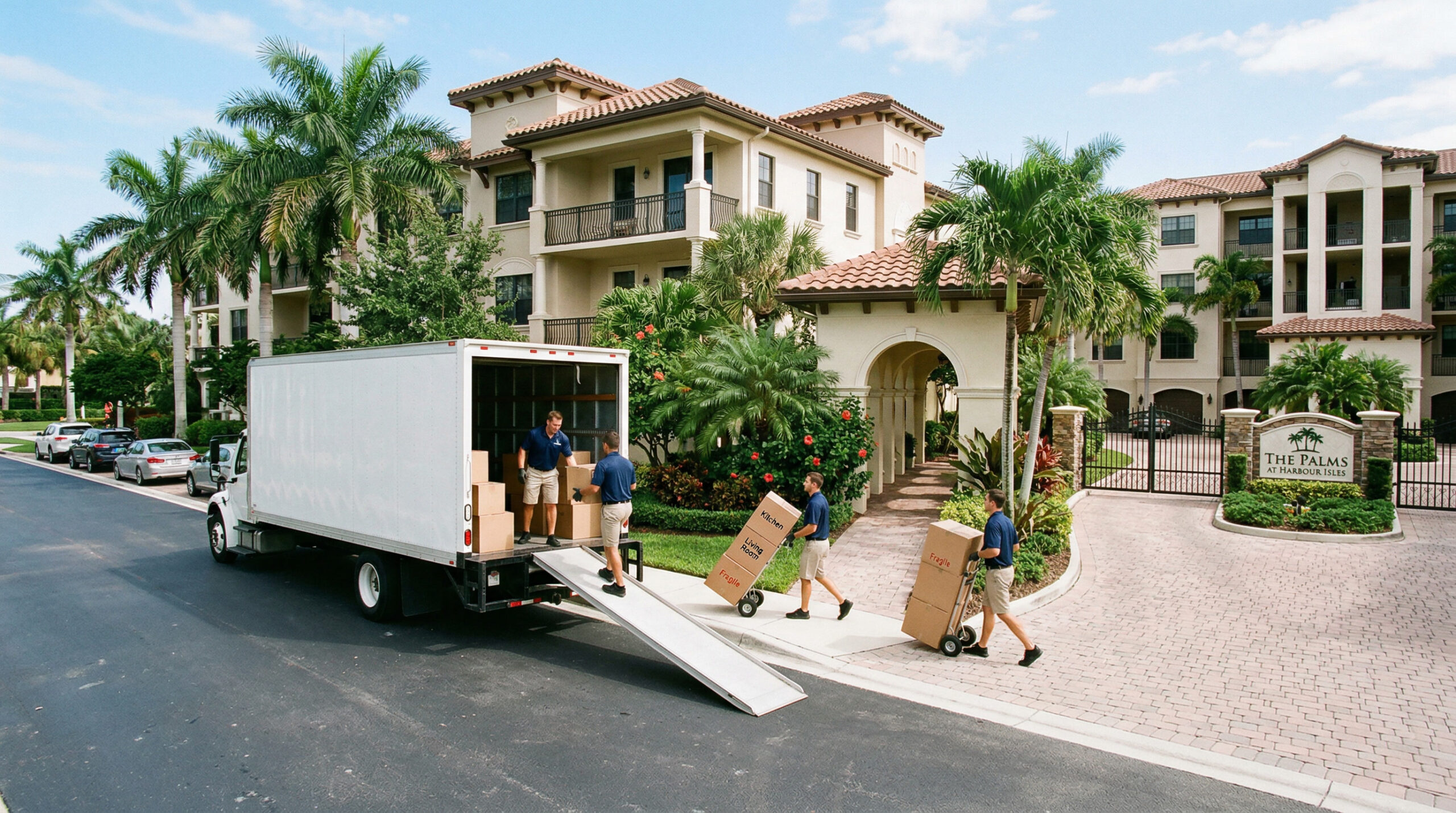
You found the house, signed the papers, and set the moving date. Everything is locked in. Then, a few days before the big day, you get a letter, or a phone call, from the HOA. They have rules about moving trucks. And parking. And hours. And deposits.
If this has never happened to you before, it can feel like a last-minute curveball. But for a lot of families moving into communities across Brevard County, HOA move requirements are just part of the process. The key is knowing what to ask before the truck rolls up.
HOAs Are Common Across the Space Coast
Brevard County has no shortage of HOA-managed communities. From Viera and Suntree to Satellite Beach, Melbourne, and Palm Bay, planned communities with homeowners associations are everywhere along the Space Coast. Each one has its own rulebook, and those rules almost always include something specific about move-in day.
That is not a complaint, HOA rules exist to protect the property and the neighbors. But they do mean you need to do a bit of homework before you schedule anything.
The First Step: Contact the HOA Early
As soon as you have a move date, reach out to your HOA or the property management company. Do not wait until the week before. Some communities require advance notice of 48 to 72 hours, and others need a formal written request submitted even earlier.
Ask specifically about move-in windows. Many HOAs restrict moving activity to certain hours, often something like 8 a.m. to 5 p.m. on weekdays, with limited or no access on Sundays and holidays. If your movers are scheduled to arrive at 7 a.m. or work into the evening, you could end up with a fine before you have even unpacked a single box.
Truck Parking and Entry Gate Access
This is one of the most overlooked parts of an HOA move. Large moving trucks cannot always enter through a community’s main gate or standard entry point. Some communities have separate service entrances for commercial vehicles. Others have height or weight restrictions that affect which route the truck can take.
Call ahead and get the details in writing if possible. Let your moving company know exactly which gate or access point to use and whether any special codes or key cards are required. A good moving crew will work with this information seamlessly, but they can only do that if you give it to them ahead of time.
Elevator Reservations in Multi-Story Buildings
If you are moving into a condo or multi-story building, common in beachside communities like Cocoa Beach or Indialantic, elevator access is usually managed and sometimes requires a reservation. Many buildings only allow one move at a time to prevent congestion in the lobby and hallways. Some require padding to be installed in the elevator before any furniture enters.
Reserve your elevator slot as early as possible. These spots can fill up on weekends, and if another resident has already claimed your preferred time, you may have to shift your schedule around theirs. Your HOA or building manager will walk you through the process.
Move-In Deposits
Some HOA communities require a refundable move-in deposit. This is typically held to cover any damage to common areas, hallways, lobbies, elevators, or shared entryways, that might occur during the move. Deposits can range from a couple hundred dollars to more, depending on the community.
Find out whether a deposit is required, how to pay it, and what the process is to get it back. Usually the deposit is returned after the HOA or property manager inspects the common areas and confirms no damage occurred. A professional moving crew that knows how to handle shared spaces carefully is the best insurance you have against losing that deposit.
Protecting Common Areas Is Everyone’s Job
Speaking of common areas, this is something both you and your movers need to take seriously. Scuff marks on walls, dings on elevator door frames, and scratches on lobby floors are the kinds of damage that cost people their deposits. They also create friction with neighbors before you have even had a chance to meet them.
Ask your movers how they protect common areas during a move. Miracle Movers of Florida crews are experienced working in HOA-managed communities all across the Space Coast. They know how to use floor runners, door jamb protectors, and padded blankets to keep shared spaces in the same shape they found them.
Quiet Hours and Neighbor Courtesy
Many HOA communities have noise ordinances or quiet hours that extend beyond standard local ordinances. Even if a local law allows noise until 10 p.m., your HOA might enforce a 9 p.m. cutoff. Make sure you know the rules so you are not finishing up a long moving day only to get a knock on the door from a neighbor or a call from the property manager.
It is also just good form to give your immediate neighbors a heads up. A quick note in the mailbox or a brief text if you already have their number goes a long way toward starting things off on the right foot.
A Quick HOA Move Checklist
Before your moving day arrives, run through this short list: Contact the HOA and confirm move-in hours. Ask about truck access and parking restrictions. Reserve elevator time if needed. Pay any required deposit and get a receipt. Share all access codes and gate information with your movers. Know the quiet hours and build your schedule around them.
That is it. None of it is complicated, but skipping any one of these steps can turn a smooth move into a stressful one.
Let Miracle Movers Handle the Details
The team at Miracle Movers of Florida has worked with HOA communities throughout Brevard County and knows how to navigate the rules without making your moving day harder than it needs to be. We will work with whatever requirements your community has and keep things running on schedule.
Call us at (407) 819-0886 or get in touch online for a free quote. Let us take the heavy lifting off your plate, HOA rules and all.