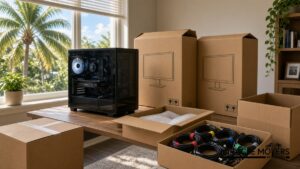

After a move, empty boxes and used packing paper can spread through the house almost as quickly as the belongings come out. A simple unpacking system keeps materials from becoming a second project and helps you reuse or dispose of them responsibly.
Set up one collection point
Choose a garage corner, spare room, or covered area for empty packing materials. Break down boxes as soon as they are completely empty, then stack them by size. Keep usable paper, bubble wrap, and cushioning in separate bags or containers.
A single collection point prevents flattened boxes from blocking hallways and doorways. It also makes it easier to see how much material you have before deciding what to keep, give away, or recycle.
Check every box before flattening it
Look beneath packing paper, inside folded flaps, and along the bottom seam. Small hardware, cords, remotes, and decorative pieces are easy to miss. Compare the contents with the box label, and do not flatten a box until everything has reached the correct room.
If a box contains furniture hardware, keep the labeled parts bag with the furniture until assembly is complete. Save instruction manuals and setup notes in one easy-to-find place.
Sort materials as you unpack
Keep clean, sturdy boxes for future storage, shipping, donations, or another move. Remove old labels or cover them clearly. Boxes that are torn, wet, stained, or no longer strong should be handled according to local recycling or disposal rules.
Flatten plain cardboard and keep it dry. Separate plastic wrap, foam, air pillows, and other materials because local programs may accept them differently. Check the rules for your city or county rather than assuming every item belongs in curbside recycling.
Offer useful supplies to someone else
Neighbors, community groups, schools, and people preparing for a move may appreciate clean boxes and packing paper. List the sizes and condition accurately, and arrange a safe pickup location. Do not pass along boxes that carried chemicals, pests, moisture, or strong odors.
Specialty boxes for televisions, mirrors, dishes, or wardrobes can be especially useful if their inserts remain intact. Store them flat and label the pieces so the next person understands how they fit together.
Unpack in an order that reduces clutter
Begin with bathrooms, bedding, medications, basic kitchen items, and work or school essentials. Then move room by room. Finish one box before opening several more whenever possible, and return packing material to the collection point after each box.
Place an empty box in each active room to collect paper and small pieces of cardboard. At the end of the day, move those materials to the main sorting area. This keeps floors clear and makes the next morning easier.
Keep pathways safe
Do not lean tall stacks of flattened cardboard where they can fall. Keep plastic film and loose paper away from children, pets, heat sources, and walking paths. Avoid overfilling bags or boxes until they are too heavy to handle comfortably.
If rain is expected, move cardboard indoors or under secure cover. Wet cardboard becomes difficult to manage and may not be accepted with clean recycling.
Give yourself a finish date
Schedule a day to deliver reusable supplies, prepare recycling, and remove damaged material. A deadline prevents the collection corner from becoming permanent storage. Keep only the amount you can store cleanly and safely.
Miracle Movers of Florida provides packing and unpacking, local and long-distance moving, loading and unloading, and furniture assembly and disassembly services. Ask about the support available for your move when requesting a quote.
Call (407) 819-0886 or request a free quote for your Space Coast move.